SMILE Eye Surgery: A Modern Solution for Clear Vision - Overview
SMILE eye surgery, vision problems like nearsightedness (myopia) and astigmatism affect millions of people worldwide, limiting daily activities and creating dependence on corrective lenses. For decades, glasses and contact lenses were the primary solutions for managing refractive errors. However, advancements in eye care have introduced surgical options that provide long-term freedom from these limitations. Among the most innovative procedures is SMILE eye surgery, or Small Incision Lenticule Extraction, a minimally invasive laser technique that corrects nearsightedness and astigmatism.
SMILE eye surgery has gained attention for its precision, quick recovery, and reduced complications compared to traditional methods. By reshaping the cornea without creating a large incision, this procedure allows many patients to experience clearer vision, often eliminating the need for glasses or contact lenses. While it is not suitable for everyone, SMILE eye surgery offers hope for individuals seeking permanent vision correction and an improved quality of life.
The popularity of SMILE eye surgery has grown rapidly, with millions of procedures performed worldwide. Patients increasingly choose SMILE over LASIK or PRK due to its minimally invasive approach, reduced post-surgery discomfort, and lower risk of dry eye symptoms. This procedure represents a significant milestone in the evolution of laser eye surgery, combining efficiency, safety, and effectiveness.
What is SMILE Eye Surgery?
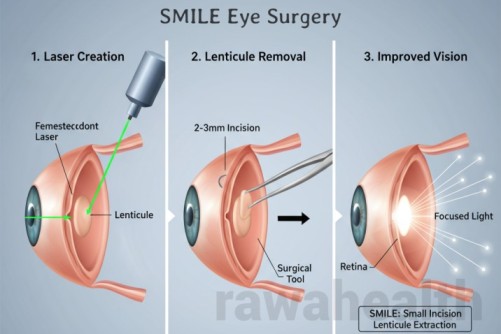
SMILE eye surgery is a laser-based procedure that reshapes the cornea to correct refractive errors such as myopia and astigmatism. Unlike LASIK, which creates a corneal flap, SMILE requires only a small incision—typically less than 4 millimeters—to remove a disc-shaped piece of corneal tissue called a lenticule. By removing this lenticule, the cornea’s shape is altered, allowing light to focus properly on the retina and improving vision.
The procedure involves a femtosecond laser that carefully carves the lenticule within the cornea. The thickness and curvature of the lenticule are precisely calculated based on the patient’s prescription, ensuring accurate vision correction. Once the lenticule is removed through the tiny incision, the cornea naturally reshapes itself, providing clearer vision.
SMILE eye surgery is minimally invasive, meaning fewer nerves are affected, less tissue is removed, and inflammation is reduced compared to traditional procedures. This results in faster recovery, minimal discomfort, and a lower risk of complications. Because no large flap is created, the structural integrity of the cornea is maintained, making SMILE especially suitable for individuals with higher prescriptions or those who lead active lifestyles.
Who Can Benefit from SMILE Eye Surgery?
SMILE eye surgery is ideal for individuals seeking long-term correction of nearsightedness and astigmatism. Candidates typically meet the following criteria:
- Age requirement: Patients must be at least 18 years old.
- Stable prescription: Vision should not have changed significantly in the past year.
- Prescription range: Myopia should fall between -1 and -10 diopters, and astigmatism should be up to 3 diopters.
- Corneal health: Corneas must be healthy, free of scarring or irregularities.
- Understanding of procedure: Patients should comprehend the benefits, limitations, and risks of SMILE eye surgery.
Individuals who meet these requirements often experience significant improvements in vision, reducing their dependence on corrective lenses. Athletes, professionals, and anyone who struggles with glasses or contact lenses in daily life may find SMILE particularly advantageous.
SMILE eye surgery is also suitable for patients with mild to moderate dry eye, as it typically causes less nerve disruption than LASIK. Those who have a higher prescription may benefit from SMILE due to the reduced risk of flap-related complications.
Who Should Avoid SMILE Eye Surgery?
While SMILE eye surgery is highly effective, it is not recommended for everyone. Certain conditions and situations may increase the risk of complications or poor outcomes:
- Pregnancy or breastfeeding: Hormonal changes can affect vision stability.
- Frequent prescription changes: Unstable vision may result in incomplete correction.
- Severe glaucoma: High eye pressure can complicate laser surgery.
- Corneal scars or irregularities: May interfere with accurate lenticule creation.
- Skin disorders affecting the eye: Can increase the risk of infection or delayed healing.
- Keratoconus: A condition causing thinning and bulging of the cornea.
- Uncontrolled diabetes: May impair healing and increase infection risk.
- Cataracts affecting vision: Other eye conditions may need treatment first.
- History of eye surgeries, injuries, or infections: Previous complications can influence outcomes.
Patients should undergo a thorough eye examination to ensure that SMILE is safe and appropriate for their eyes. A detailed discussion with an ophthalmologist helps identify potential risks and alternatives.
Preparing for SMILE Eye Surgery
Proper preparation is essential to ensure a safe and successful SMILE procedure. During a pre-surgery consultation, the ophthalmologist will evaluate the eyes thoroughly, checking for any conditions that may interfere with the surgery. This includes measuring corneal thickness, curvature, and overall eye health.
Patients are usually advised to:
- Discontinue certain medications or supplements that may increase surgical risk.
- Avoid eating or drinking for a specified period before surgery.
- Arrange for an adult companion to drive them home after the procedure.
- Discuss any concerns or questions with their surgeon to understand the procedure and recovery expectations.
Pre-surgery preparation also includes educating the patient about what to expect during and after SMILE eye surgery. Following these instructions carefully reduces risks and ensures smoother recovery.
The SMILE Eye Surgery Procedure Step-by-Step
SMILE eye surgery begins with numbing the eye using anesthetic drops. This ensures that the procedure is painless and comfortable. A femtosecond laser is then used to create a lenticule within the cornea. This lenticule, which resembles a soft contact lens, is thicker in the center and thinner at the edges.
A small incision, less than 4 millimeters long, is made in the cornea to remove the lenticule. This tiny incision eliminates the need for stitches, and the cornea heals naturally within a day or two. By removing the lenticule, the cornea’s shape is altered, allowing light to focus correctly on the retina and improving vision.
The procedure is quick, typically lasting only a few minutes per eye, with the laser portion taking about 30 seconds. Patients usually experience minimal discomfort and can return home the same day.
Post-surgery, patients should rest and avoid strenuous activities. Vision may improve immediately or gradually over several days, and the majority of patients return to normal routines within a couple of days.
Recovery After Surgery
Recovery from SMILE eye surgery is generally fast due to the minimally invasive nature of the procedure. Patients are advised to avoid water contact with the eyes for a few days and to protect their eyes from dust, wind, and bright sunlight.
During recovery:
- Wear protective eyewear such as sunglasses.
- Avoid eye makeup until cleared by the surgeon.
- Follow prescribed eye drop routines to reduce inflammation and prevent infection.
- Avoid swimming, hot tubs, or any activities that could expose the eyes to bacteria.
Most patients notice improved vision within a few days, with further enhancement over several weeks. Regular follow-up appointments allow the surgeon to monitor healing and address any concerns.
Benefits of SMILE Eye Surgery
SMILE eye surgery offers several benefits compared to traditional corrective methods:
- Reduced dependence on glasses and contact lenses: Most patients achieve 20/40 or better vision.
- Minimally invasive: The small incision preserves corneal strength and reduces complications.
- Faster recovery: Patients can resume normal activities sooner than with LASIK or PRK.
- Lower risk of dry eye: Less nerve disruption minimizes dry eye symptoms.
- Stable outcomes for higher prescriptions: Effective for patients with significant nearsightedness.
- Active lifestyle friendly: No corneal flap reduces risk during physical activities.
These benefits make SMILE eye surgery an attractive option for those seeking long-term vision correction.
Risks and Potential Complications
Though SMILE is highly safe and effective, patients should be aware of potential risks:
- Glare or halos around lights, especially at night.
- Temporary dry eyes, which may require lubricating drops.
- Rare need for additional surgery to smooth the cornea or remove debris.
- Very rare vision loss in extreme cases.
Choosing an experienced surgeon and following post-operative care instructions reduces the likelihood of complications. Patients are encouraged to report any unusual symptoms promptly.
Comparing SMILE Eye Surgery to Other Eye Surgeries
SMILE eye surgery differs from LASIK and PRK in several ways:
- LASIK: Involves creating a corneal flap, which may lead to flap-related complications and slower recovery for some patients.
- PRK: Surface ablation without a flap, often resulting in longer healing and discomfort compared to SMILE.
- SMILE: Minimal incision, faster recovery, less tissue disruption, and lower risk of dry eye.
While LASIK and PRK can treat a wider range of vision issues, SMILE is particularly advantageous for myopia and astigmatism, higher prescriptions, and active lifestyles.
SMILE Eye Surgery Cost in India
| Category | Cost Range (USD) |
|---|---|
| Per Eye (Standard) | $600 – $1,000 |
| Per Eye (Advanced Tech) | $1,000 – $1,200 |
| Both Eyes (Standard) | $1,200 – $2,000 |
| Both Eyes (Advanced) | $2,000 – $2,400 |
| Additional Costs | $60 – $120 |
Conclusion on SMILE Eye Surgery
SMILE eye surgery represents a significant advancement in vision correction, offering precise, safe, and effective treatment for myopia and astigmatism. Patients benefit from reduced dependence on glasses and contacts, faster recovery, and minimal post-operative discomfort.
Consulting an experienced eye specialist is crucial to determine if SMILE is the right option. With proper evaluation, preparation, and adherence to post-surgery care, most patients experience excellent outcomes and improved quality of life. For those seeking a modern solution to vision correction, SMILE eye surgery provides hope for clear, independent, and lasting vision.
Our Step-by-Step Process – How We Work
- Initial Consultation: Understand medical history, concerns, and goals for personalized guidance.
- Personalized Treatment Plan: Customized plan with recommended treatment, costs, and timeline.
- Travel & Preparation: Visa, airport transfers, accommodation, and language support.
- Scheduling & Procedure: Treatment at top hospitals with experienced doctors using advanced technology.
- Aftercare & Follow-Up: Nursing care, follow-ups, and continuous support for smooth recovery.
Why Patients Choose India for Medical Treatment
- Expert Doctors & Specialists: Highly skilled, internationally trained doctors handle advanced procedures and complex surgeries.
- State-of-the-Art Hospitals: Modern hospitals with latest technology and international accreditations ensure world-class treatment.
- Affordable Costs: Medical care in India is 30%–70% cheaper than in Western countries without compromising quality.
- Quick Access: Minimal waiting times allow patients to get treated promptly.
- End-to-End Support: Visa, airport transfers, accommodation, language translation, and post-treatment follow-up provided.
- High Success Rates: Proven track record in surgeries, transplants, and advanced treatments.
- Personalized Care: Individual attention ensures a smooth, safe, and comfortable medical journey.
Get Started with Rawa Health Services
- If you’re considering treatment in India, Rawa Health Services will guide you every step of the way:
- ✅ Free Pre-Surgery Consultation
✅ Doctor & Hospital Appointment
✅ Visa & Travel Assistance
✅ Airport Pickup & Accommodation
✅ Post-Treatment Support
✅ Multilingual Translators for Your Native Language - 📞 Call/WhatsApp: +91-9990978550
📧 Email: rawahealthservices@gmail.com