Skin Removal Surgery – Procedure, Types, Recover & Cost
Skin Removal Surgery: Excess skin can develop after massive weight loss, bariatric surgery, or pregnancy. While losing weight improves health and confidence, sagging or loose skin often remains and cannot tighten naturally. Skin removal surgery, also called body contouring surgery, helps eliminate extra skin and improve body shape, giving patients a firmer and more toned appearance.
This comprehensive guide explains what skin removal surgery is, its types, procedure details, recovery, benefits, risks, and the approximate cost in India.
What is Skin Removal Surgery?
Skin removal surgery is a cosmetic procedure that removes excess, sagging skin from different parts of the body. It not only improves physical appearance but also enhances comfort, mobility, and hygiene.
People who lose significant weight—through lifestyle changes or bariatric surgery—often experience stretched skin that does not retract. This loose skin can cause:
- Physical discomfort
- Skin irritation or rashes
- Difficulty in exercising
- Self-consciousness about appearance
Skin removal surgery addresses these concerns by reshaping the body.
Types of Skin Removal Surgery
Depending on the area of excess skin, different types of procedures are performed:
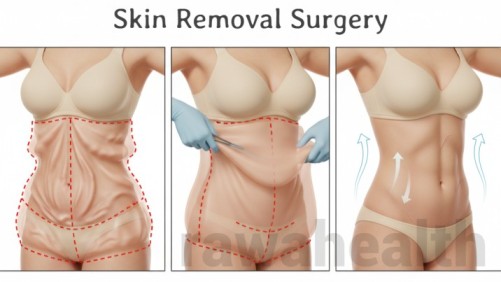
1. Tummy Tuck (Abdominoplasty)
- Removes loose skin and tightens abdominal muscles.
- Ideal after weight loss or pregnancy.
- Results in a flatter and firmer stomach.
2. Arm Lift (Brachioplasty)
- Removes sagging skin from the upper arms.
- Helps achieve toned and slimmer arms.
3. Thigh Lift
- Removes extra skin from the inner or outer thighs.
- Improves thigh contour and reduces chafing.
4. Lower Body Lift
- Addresses sagging skin in the abdomen, buttocks, hips, and thighs.
- Provides comprehensive reshaping after massive weight loss.
5. Upper Body Lift
- Removes skin from the back, chest, and flanks.
- Common for patients who lost a large amount of weight.
6. Breast Lift (Mastopexy)
- Raises and reshapes sagging breasts.
- May be combined with implants for fuller results.
7. Face and Neck Lift
- Tightens loose skin on the face, jawline, and neck.
- Restores a more youthful appearance.
Who is a Candidate for Skin Removal Surgery?
You may be eligible if:
- You lost a significant amount of weight.
- Your BMI is stable, and weight loss has plateaued.
- You are physically healthy and a non-smoker.
- You have realistic expectations about scarring and recovery.
- Loose skin affects your mobility, hygiene, or self-confidence.
How is Skin Removal Surgery Performed?
The procedure varies by type but generally includes the following steps:
1. Preoperative Preparation
- The doctor performs a medical evaluation, blood tests, and imaging.
- The patient stops smoking and adjusts medications as instructed.
- The surgeon marks incision areas before surgery.
2. Anesthesia
- The anesthesiologist administers general anesthesia to ensure the patient is pain-free and comfortable.
3. Incision and Skin Removal
- The surgeon makes carefully planned incisions.
- The surgeon removes excess skin and fat.
- The surgeon may tighten the underlying muscles for better contour.
4. Closure
- The surgeon closes the incisions with sutures.
- The medical team applies dressings and compression garments to support healing.
5. Post-Surgery Care
- The medical team temporarily places drains to prevent fluid buildup.
- The team provides pain management and prescribes antibiotics as needed.
Recovery After Skin Removal Surgery
Recovery depends on the extent of surgery:
- Hospital Stay: Usually 1–3 days.
- Swelling and Bruising: Common for 2–3 weeks.
- Stitches/Drains: Removed in 1–2 weeks.
- Compression Garments: Worn for several weeks to reduce swelling.
- Back to Work: 2–4 weeks for smaller surgeries, 6–8 weeks for full body lifts.
- Exercise: Light walking within days; avoid heavy workouts for 6–8 weeks.
- Patients notice significant improvement in body shape after swelling reduces.
Benefits of Skin Removal Surgery
- Firmer and more contoured body
- Improved mobility and comfort
- Better skin hygiene and reduced rashes
- Enhanced self-confidence and clothing options
- Long-lasting results with stable weight maintenance
Risks and Considerations
Like any major surgery, skin removal surgery has potential risks:
- Infection at the incision site
- Scarring (though often hidden in natural folds)
- Swelling, bruising, or numbness
- Blood clots or fluid buildup
- Delayed wound healing
Choosing a board-certified cosmetic surgeon helps minimize risks.
Cost of Skin Removal Surgery in India
The price varies based on the type of surgery, hospital, surgeon, and extent of skin removal.
| Type of Surgery | Average Cost (USD) |
|---|---|
| Tummy Tuck | $2,000 – $4,500 |
| Arm Lift | $1,500 – $3,000 |
| Thigh Lift | $2,000 – $4,000 |
| Lower Body Lift | $4,500 – $8,000 |
| Upper Body Lift | $4,000 – $7,000 |
| Breast Lift | $2,500 – $4,500 |
| Face/Neck Lift | $2,000 – $5,000 |
India offers world-class facilities and experienced plastic surgeons at much lower costs compared to Western countries, making it a popular destination for international patients.
Lifestyle After Skin Removal Surgery
To maintain results:
- Maintain a stable, healthy weight.
- Eat a balanced diet rich in protein, vitamins, and minerals.
- Exercise regularly, focusing on strength and flexibility.
- Avoid smoking and excessive alcohol consumption.
- Follow post-operative care instructions.
Conclusion
Skin removal surgery is a life-changing procedure for those who have lost significant weight but struggle with sagging skin. With options like tummy tuck, arm lift, thigh lift, and full body contouring, patients can achieve a toned, firmer body. Recovery requires patience, but the long-term benefits—both physical and emotional—are remarkable.
India provides skilled surgeons, advanced facilities, and affordable pricing, making it a top choice for patients worldwide seeking skin removal surgery. Consulting a qualified plastic surgeon ensures the right procedure, safe recovery, and lasting results.
Our Step-by-Step Process – How We Work
- Initial Consultation: Understand medical history, concerns, and goals for personalized guidance.
- Personalized Treatment Plan: Customized plan with recommended treatment, costs, and timeline.
- Travel & Preparation: Visa, airport transfers, accommodation, and language support.
- Scheduling & Procedure: Treatment at top hospitals with experienced doctors using advanced technology.
- Aftercare & Follow-Up: Nursing care, follow-ups, and continuous support for smooth recovery.
Why Patients Choose India for Medical Treatment
- Expert Doctors & Specialists: Highly skilled, internationally trained doctors handle advanced procedures and complex surgeries.
- State-of-the-Art Hospitals: Modern hospitals with latest technology and international accreditations ensure world-class treatment.
- Affordable Costs: Medical care in India is 30%–70% cheaper than in Western countries without compromising quality.
- Quick Access: Minimal waiting times allow patients to get treated promptly.
- End-to-End Support: Visa, airport transfers, accommodation, language translation, and post-treatment follow-up provided.
- High Success Rates: Proven track record in surgeries, transplants, and advanced treatments.
- Personalized Care: Individual attention ensures a smooth, safe, and comfortable medical journey.
Get Started with Rawa Health Services
- If you’re considering treatment in India, Rawa Health Services will guide you every step of the way:
- ✅ Free Pre-Surgery Consultation
✅ Doctor & Hospital Appointment
✅ Visa & Travel Assistance
✅ Airport Pickup & Accommodation
✅ Post-Treatment Support
✅ Multilingual Translators for Your Native Language - 📞 Call/WhatsApp: +91-9990978550
📧 Email: rawahealthservices@gmail.com