Prostate Cancer Surgery – Procedure, Types, Benefits - Overview
Prostate Cancer Surgery is a common malignancy affecting men, particularly those over 50 years of age. Surgery remains one of the primary treatments, especially for localized prostate cancer, where the tumor has not spread beyond the prostate gland.
Prostate cancer surgery aims to remove cancerous tissue, prevent metastasis, and preserve the patient’s quality of life. It is often combined with radiotherapy, hormone therapy, or chemotherapy depending on the cancer stage and aggressiveness.
What Is Prostate Cancer Surgery?
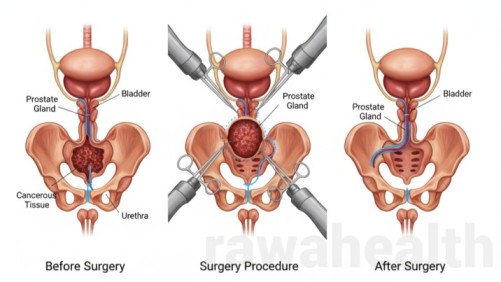
Prostate cancer surgery involves removal of the prostate gland and sometimes surrounding tissues, including seminal vesicles and nearby lymph nodes. The procedure helps in:
- Eliminating cancerous cells from the prostate
- Reducing the risk of cancer spreading to bones or other organs
- Improving urinary and sexual function post-recovery
Surgery is most effective when prostate cancer is detected early through PSA testing or imaging studies.
Types of Prostate Cancer Surgery
Surgeons may choose from several surgical approaches depending on the tumor location, size, patient age, and overall health:
1. Radical Prostatectomy
- Procedure: Complete removal of the prostate gland along with seminal vesicles.
- Purpose: Standard treatment for localized prostate cancer.
- Benefits: High cure rate for early-stage cancers; may preserve nerve function with nerve-sparing techniques.
2. Laparoscopic Prostatectomy
- Procedure: Minimally invasive surgery using small abdominal incisions and a camera.
- Purpose: Treat localized cancer while reducing recovery time.
- Benefits: Less pain, shorter hospital stay, quicker recovery, smaller scars.
3. Robotic-Assisted Prostatectomy
- Procedure: Surgeons use robotic systems to perform precise prostate removal.
- Purpose: Early-stage or complex tumors requiring high precision.
- Benefits: Reduced blood loss, enhanced accuracy, faster recovery, improved functional outcomes.
4. Transurethral Resection of the Prostate (TURP)
- Procedure: Removal of part of the prostate via the urethra using a resectoscope.
- Purpose: Often used for symptom relief in enlarged prostate or cancer in select cases.
- Benefits: Minimally invasive; improves urinary flow and reduces obstruction.
Who Is a Candidate for Prostate Cancer Surgery?
Surgery is recommended for patients who:
- Have localized prostate cancer (Stage I or II)
- Are in good overall health and can tolerate anesthesia
- Have no significant comorbidities that increase surgical risk
Doctors conduct PSA tests, MRI scans, biopsies, and CT scans to confirm eligibility.
Preoperative Preparation
Before surgery, patients undergo:
- Medical evaluation: Blood tests, ECG, imaging
- Anesthesia assessment to confirm suitability for general anesthesia
- Lifestyle adjustments: Smoking cessation, proper nutrition, managing chronic conditions
- Patient education: Understanding the procedure, recovery, potential side effects, and post-surgery lifestyle changes
Surgical Procedure
Radical Prostatectomy
- Surgeons make an incision in the lower abdomen to access the prostate.
- They carefully remove the prostate gland and seminal vesicles.
- Nearby lymph nodes may be removed for cancer evaluation.
- Nerves controlling urinary and sexual function may be preserved if possible.
2. Laparoscopic or Robotic Surgery
- Surgeons make small incisions and insert a camera and instruments.
- Robotic systems enhance precision and visualization.
- The prostate is carefully dissected and removed.
- The bladder and urethra are reconnected.
Postoperative Care
- Catheter remains in place for 1–2 weeks to aid urinary healing
- Pain management through medications or nerve blocks
- Hospital stay: 2–5 days depending on procedure type
- Activity: Light walking encouraged; strenuous activity avoided for several weeks
Recovery After Prostate Cancer Surgery
Recovery varies based on procedure type and patient health:
- Urinary Control: Gradually improves over weeks to months; pelvic floor exercises may help
- Sexual Function: Nerve-sparing surgeries preserve erectile function in many patients
- Follow-Up: Regular PSA monitoring ensures no recurrence
- Diet & Lifestyle: Balanced diet, hydration, and gentle exercise promote healing
Benefits of Prostate Cancer Surgery
- Eliminates localized cancer
- Reduces risk of metastasis
- Preserves urinary and sexual function with nerve-sparing techniques
- High survival rates in early-stage prostate cancer
- Can be combined with additional therapies for optimal outcomes
Risks and Complications
Though generally safe, surgery carries potential risks:
- Bleeding or hematoma
- Infection at surgical site or urinary tract
- Urinary incontinence (usually temporary)
- Erectile dysfunction (nerve-sparing reduces risk)
- Reactions to anesthesia
- Blood clots or deep vein thrombosis
Experienced surgeons and careful patient selection reduce complications significantly.
Cost of Prostate Cancer Surgery in India vs Other Countries
| Country | Average Cost (USD) |
|---|---|
| India | $4,000 – $8,000 |
| USA | $20,000 – $35,000 |
| UK | $15,000 – $30,000 |
| Germany | $18,000 – $32,000 |
Notes:
- India provides affordable, high-quality treatment with experienced urologists.
- No waiting times and advanced hospitals benefit both domestic and international patients.
Conclusion
Prostate cancer surgery remains a highly effective treatment for localized prostate cancer. With early diagnosis, skilled surgeons, and advanced facilities, patients can achieve excellent outcomes, including cancer removal, symptom relief, and improved quality of life.
Postoperative adherence to lifestyle modifications, rehabilitation exercises, and regular medical monitoring is essential for long-term success.
Our Step-by-Step Process – How We Work
- Initial Consultation: Understand medical history, concerns, and goals for personalized guidance.
- Personalized Treatment Plan: Customized plan with recommended treatment, costs, and timeline.
- Travel & Preparation: Visa, airport transfers, accommodation, and language support.
- Scheduling & Procedure: Treatment at top hospitals with experienced doctors using advanced technology.
- Aftercare & Follow-Up: Nursing care, follow-ups, and continuous support for smooth recovery.
Why Patients Choose India for Medical Treatment
- Expert Doctors & Specialists: Highly skilled, internationally trained doctors handle advanced procedures and complex surgeries.
- State-of-the-Art Hospitals: Modern hospitals with latest technology and international accreditations ensure world-class treatment.
- Affordable Costs: Medical care in India is 30%–70% cheaper than in Western countries without compromising quality.
- Quick Access: Minimal waiting times allow patients to get treated promptly.
- End-to-End Support: Visa, airport transfers, accommodation, language translation, and post-treatment follow-up provided.
- High Success Rates: Proven track record in surgeries, transplants, and advanced treatments.
- Personalized Care: Individual attention ensures a smooth, safe, and comfortable medical journey.
Get Started with Rawa Health Services
- If you’re considering treatment in India, Rawa Health Services will guide you every step of the way:
- ✅ Free Pre-Surgery Consultation
✅ Doctor & Hospital Appointment
✅ Visa & Travel Assistance
✅ Airport Pickup & Accommodation
✅ Post-Treatment Support
✅ Multilingual Translators for Your Native Language - 📞 Call/WhatsApp: +91-9990978550
📧 Email: rawahealthservices@gmail.com