Partial Knee Replacement – Procedure, Benefits, Risks & Cost
Partial Knee Replacement, also called unicompartmental knee replacement, is a minimally invasive orthopedic surgery targeting only the damaged compartment of the knee joint. It is ideal for patients suffering from osteoarthritis limited to a single compartment.
Unlike total knee replacement, this surgery preserves healthy bone, cartilage, and ligaments, allowing patients to regain more natural knee movement. Moreover, it results in faster recovery, less pain, and shorter hospital stays.
India has become a top destination for this procedure due to its experienced orthopedic surgeons, advanced hospitals, and affordable treatment costs. Consequently, both domestic and international patients prefer India for safe, effective, and budget-friendly knee care.
What is Partial Knee Replacement?
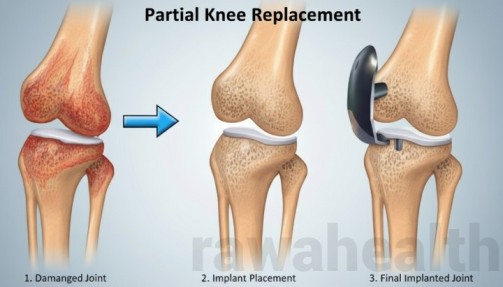
Partial Knee Replacement focuses on replacing only the affected compartment of the knee. The knee consists of three compartments:
- Medial compartment (inner side)
- Lateral compartment (outer side)
- Patellofemoral compartment (between kneecap and thigh bone)
Osteoarthritis often affects only one compartment, commonly the medial side. During surgery, the surgeon removes the damaged tissue and installs a metal-plastic implant, leaving healthy compartments untouched.
This approach ensures smaller incisions, minimal tissue trauma, faster recovery, and better knee function. As a result, patients often regain more natural movement compared to total knee replacement.
Why Partial Knee Replacement is Performed
Partial Knee Replacement is recommended in the following cases:
- Arthritis or cartilage damage restricted to one compartment
- Persistent pain that limits daily activities, such as walking or climbing stairs
- Strong ligaments and good joint stability
- Desire for a less invasive option
Therefore, this surgery relieves pain, restores mobility, and delays total knee replacement. Additionally, it benefits active individuals seeking faster recovery and better knee function.
Types of Partial Knee Replacement
Surgeons choose the type based on location and severity of knee damage:
- Medial or Lateral Compartment Replacement: Targets the inner or outer side; most commonly performed.
- Patellofemoral Replacement: Focuses on the area between kneecap and thigh bone; ideal if only this compartment is damaged.
Selecting the appropriate type ensures optimal knee function and long-term success.
Procedure of Partial Knee Replacement
We can break the procedure into Preoperative, Intraoperative, and Postoperative stages to improve clarity.
Preoperative Stage
- Complete medical evaluation including blood tests, ECG, X-rays, and MRI scans
- Physiotherapy to strengthen knee-supporting muscles
- Lifestyle adjustments such as quitting smoking and achieving optimal weight
- Patient education about procedure, potential risks, and recovery steps
Intraoperative Stage
- The surgeon administers spinal or general anesthesia to ensure the patient feels no pain
- A small incision (8–10 cm) is made over the affected compartment
- The surgeon removes the damaged bone and cartilage while preserving healthy compartments
- A metal and plastic implant is carefully positioned to restore the joint surface
Postoperative Stage
- The incision is sutured and dressed
- Patients are monitored for vital signs and potential complications
- Physiotherapy begins within 24–48 hours to restore movement and strengthen muscles
By dividing the stages, patients and caregivers can better understand the surgical process and what to expect.
Who is a Candidate for Partial Knee Replacement?
Ideal candidates generally:
- Have arthritis or damage limited to one compartment
- Are aged 40–70 years, though younger patients may qualify
- Have intact ligaments and healthy cartilage in other compartments
- Want faster recovery and natural knee movement
- Do not have inflammatory arthritis or severe deformities
Thus, a detailed assessment including X-rays, MRI, and physical examination helps surgeons confirm suitability.
Preoperative Preparation
Proper preparation significantly improves surgical success and recovery. Key steps include:
- Medical Evaluation: Complete health check including blood tests, ECG, and imaging
- Physiotherapy: Exercises to strengthen muscles around the knee
- Lifestyle Adjustments: Quit smoking, optimize weight, follow dietary advice
- Patient Education: Learn about the procedure, recovery process, and post-surgery exercises
Following these instructions reduces risks and ensures better outcomes.
Recovery After Partial Knee Replacement
Recovery progresses through different phases:
Hospital Stay
- Usually 2–4 days depending on health and complexity
Early Mobility
- Patients begin walking with support within 24–48 hours
- Physiotherapy starts immediately to improve movement and strength
Return to Daily Activities
- Light activities resume within 4–6 weeks
- Gradually increase walking, stretching, and low-impact exercises
Long-Term Recovery
- Complete joint adaptation may take 3–6 months
- Continued physiotherapy ensures maximum mobility and strength
- Consequently, patients experience pain relief and improved mobility within weeks.
Benefits of Partial Knee Replacement
Partial Knee Replacement offers several advantages:
- Minimally Invasive: Smaller incision and reduced tissue damage
- Faster Recovery: Early return to daily activities
- Less Pain and Blood Loss: Compared to total knee replacement
- Preserves Knee Function: Healthy compartments and ligaments remain intact
- Future Flexibility: Can convert to total knee replacement if arthritis progresses
- Improved Quality of Life: Relieves pain and restores mobility
As a result, patients often resume normal activities confidently.
Risks and Complications
Although generally safe, possible risks include:
- Infection at the surgical site
- Blood clots (deep vein thrombosis)
- Implant loosening or wear
- Persistent pain or stiffness
- Rare need for revision surgery
However, choosing an experienced surgeon and following post-operative instructions significantly reduces these risks.
Cost of Partial Knee Replacement in India vs Other Countries
| Country | Average Cost (USD) |
|---|---|
| India | $4,000 – $7,000 |
| USA | $20,000 – $35,000 |
| UK | $15,000 – $25,000 |
| Germany | $18,000 – $30,000 |
| Australia | $17,000 – $28,000 |
| Canada | $12,000 – $22,000 |
Key Points:
- India offers 60–70% lower costs than the USA, UK, or Germany.
- Advanced hospitals in India provide world-class care with experienced orthopedic surgeons.
- International patients benefit from affordable, high-quality treatment with shorter waiting time
Post-Surgery Lifestyle & Maintenance
Maintaining proper care ensures long-term joint health:
- Physiotherapy: Continue exercises to strengthen muscles and maintain flexibility
- Weight Management: Keep a healthy weight to reduce joint stress
- Activity Modification: Avoid high-impact exercises in early recovery
- Regular Checkups: Monitor implant and joint health
- Healthy Diet: Consume protein-rich, balanced meals to support healing
With proper care, patients can enjoy pain-free movement and an active lifestyle for many years.
Conclusion
Partial Knee Replacement is a highly effective, minimally invasive surgery for patients with localized knee arthritis. By replacing only the damaged compartment, patients experience faster recovery, more natural movement, and lasting pain relief.
India’s expert orthopedic surgeons, modern hospitals, and affordable costs make it an excellent choice for both domestic and international patients. Careful patient selection, skilled surgery, and dedicated rehabilitation remain key to optimal outcomes and improved quality of life.
Our Step-by-Step Process – How We Work
- Initial Consultation: Understand medical history, concerns, and goals for personalized guidance.
- Personalized Treatment Plan: Customized plan with recommended treatment, costs, and timeline.
- Travel & Preparation: Visa, airport transfers, accommodation, and language support.
- Scheduling & Procedure: Treatment at top hospitals with experienced doctors using advanced technology.
- Aftercare & Follow-Up: Nursing care, follow-ups, and continuous support for smooth recovery.
Why Patients Choose India for Medical Treatment
- Expert Doctors & Specialists: Highly skilled, internationally trained doctors handle advanced procedures and complex surgeries.
- State-of-the-Art Hospitals: Modern hospitals with latest technology and international accreditations ensure world-class treatment.
- Affordable Costs: Medical care in India is 30%–70% cheaper than in Western countries without compromising quality.
- Quick Access: Minimal waiting times allow patients to get treated promptly.
- End-to-End Support: Visa, airport transfers, accommodation, language translation, and post-treatment follow-up provided.
- High Success Rates: Proven track record in surgeries, transplants, and advanced treatments.
- Personalized Care: Individual attention ensures a smooth, safe, and comfortable medical journey.
Get Started with Rawa Health Services
- If you’re considering treatment in India, Rawa Health Services will guide you every step of the way:
- ✅ Free Pre-Surgery Consultation
✅ Doctor & Hospital Appointment
✅ Visa & Travel Assistance
✅ Airport Pickup & Accommodation
✅ Post-Treatment Support
✅ Multilingual Translators for Your Native Language - 📞 Call/WhatsApp: +91-9990978550
📧 Email: rawahealthservices@gmail.com