Mastectomy: Surgery, Recovery, Risks, Cost and Reconstruction
Mastectomy is a surgical procedure that removes breast tissue to treat or prevent breast cancer. It is often recommended for patients with breast cancer, high-risk genetic factors, or those with recurrent tumors. Mastectomy aims to remove cancerous cells completely and reduce the risk of recurrence. Along with physical recovery, the surgery often requires emotional support due to changes in body image. Patients may also consider breast reconstruction either immediately during surgery or later, to restore breast shape and appearance.
What Is Mastectomy?
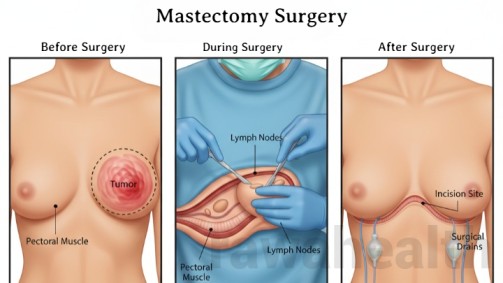
A mastectomy is a type of surgery that removes breast tissue to treat breast cancer or reduce the risk of developing it. The procedure may involve removing part of the breast (lumpectomy), the entire breast, or both breasts in cases of bilateral cancer or high genetic risk. Mastectomy may also involve removing lymph nodes under the arm to check for cancer spread. The goal is to remove all cancerous tissue and prevent the disease from spreading further. Patients often discuss treatment plans and reconstruction options with their healthcare provider before surgery.
Types of Mastectomy
Mastectomy procedures vary based on the amount of tissue removed and the patient’s treatment needs. Each type serves a specific purpose:
1. Partial Mastectomy (Lumpectomy)
- Purpose: Removes only the tumor and a margin of surrounding healthy tissue.
- Suitability: Ideal for early-stage breast cancer where conserving most of the breast is possible.
- Procedure: Surgeons remove the tumor with a rim of healthy tissue to ensure clear margins while preserving the rest of the breast.
- Recovery & Reconstruction: Minimal recovery time; often followed by radiation therapy. Reconstruction is usually not necessary.
2. Total or Simple Mastectomy
- Purpose: Removes all breast tissue while leaving chest muscles intact.
- Suitability: Recommended for larger tumors or patients with a higher risk of recurrence.
- Procedure: Entire breast tissue is removed, sometimes including the nipple and areola.
- Recovery & Reconstruction: Patients may choose breast implants or tissue flap reconstruction after healing.
3. Double / Bilateral Mastectomy
- Purpose: Removes both breasts, either prophylactically or due to cancer in both breasts.
- Suitability: Patients with high genetic risk (BRCA mutations) or bilateral cancer.
- Procedure: Surgeons remove all breast tissue from both sides, sometimes preserving skin or nipple for reconstruction.
- Recovery & Reconstruction: Can include simultaneous breast reconstruction using implants or autologous tissue.
4. Skin-Sparing / Nipple-Sparing Mastectomy
- Purpose: Removes breast tissue but preserves skin and/or nipple.
- Suitability: Often chosen by patients planning immediate reconstruction for better cosmetic outcomes.
- Procedure: Surgeons carefully remove underlying breast tissue while keeping skin and nipple intact.
- Recovery & Reconstruction: Ideal for implant or tissue flap reconstruction; recovery focuses on wound healing and scar management.
5. Modified Radical Mastectomy
- Purpose: Removes all breast tissue along with axillary lymph nodes.
- Suitability: Recommended if cancer has spread to lymph nodes or high-risk tumors.
- Procedure: Surgeons remove the breast and axillary lymph nodes to reduce recurrence risk.
- Recovery & Reconstruction: Reconstruction can be delayed or performed simultaneously. Physical therapy may be required to restore shoulder and arm mobility.
6. Radical Mastectomy (Rare Today)
- Purpose: Removes breast tissue, chest muscles, and axillary lymph nodes.
- Suitability: Rarely used; for advanced tumors involving chest muscles.
- Procedure: Extensive surgery removing tissue and muscles; often followed by reconstructive surgery.
- Recovery & Reconstruction: Longer recovery due to the extent of surgery; reconstruction may involve tissue flaps from the back or abdomen.
7. Prophylactic Mastectomy
- Purpose: Preventive removal of breast tissue to lower risk of cancer.
- Suitability: Patients with BRCA1/BRCA2 or other genetic mutations, or strong family history of breast cancer.
- Procedure: Complete removal of one or both breasts, sometimes preserving skin and nipple for reconstruction.
- Recovery & Reconstruction: Immediate or delayed reconstruction is common; counseling is recommended due to emotional impact.
How Mastectomy Treats Breast Cancer
Mastectomy works by removing all cancerous breast tissue and nearby lymph nodes, preventing the spread of cancer cells. It may be combined with chemotherapy, radiation therapy, or hormone therapy depending on the stage and type of cancer. The surgery ensures maximum removal of cancerous tissue while minimizing the risk of recurrence.
Preparing for Mastectomy
Preparation is essential for a smooth surgery and recovery:
- Medical Evaluation: Blood tests, imaging, and overall health assessment.
- Medication Adjustments: Stop medications that increase bleeding risk.
- Lifestyle Changes: Quit smoking to improve healing.
- Emotional Support: Counseling or support groups to manage anxiety.
- Home Preparation: Arrange help for meals, chores, and daily activities.
- Preoperative Instructions: Fasting and hygiene protocols before surgery.
Surgical Procedure
Mastectomy is performed under general anesthesia:
- Sterilization of surgical site and IV antibiotics.
- Identification of lymph nodes using dye or radioactive tracer.
- Removal of breast tissue and possibly axillary lymph nodes.
- Optional immediate reconstruction using implants or tissue flaps.
- Placement of drains to remove fluid and reduce swelling.
Procedure duration depends on type: partial mastectomy (~1 hour), total/bilateral mastectomy (2–4 hours), or with reconstruction (4–6 hours).
Recovery After Mastectomy
- Hospital Stay: Usually 1–2 nights.
- Pain Management: Prescription medications and wound care.
- Mobility: Gradual arm exercises to prevent stiffness.
- Lifestyle: Avoid lifting heavy objects; follow wound care instructions.
- Emotional Support: Counseling or peer groups recommended.
- Full recovery may take 4–6 weeks; nerve sensations may take months to return.
Risks and Complications
- Early: Infection, hematoma, seroma, flap necrosis.
- Delayed: Post-mastectomy pain syndrome, lymphedema, scarring.
- Rare: Allergic reactions, tissue damage, complications from reconstruction.
Breast Reconstruction
- Implants: Saline or silicone to restore breast shape.
- Autologous Tissue Flaps: Tissue from abdomen, back, or thighs.
- Combination: Flap plus implant for enhanced contour.
Timing can be immediate or delayed depending on patient choice and medical factors.
Cost of Mastectomy in India vs. Other Countries
| Country | Average Cost (USD) |
|---|---|
| India | $3,000 – $6,000 |
| United States | $15,000 – $25,000 |
| United Kingdom | $14,000 – $18,000 |
| Germany | $12,000 – $20,000 |
Patients from around the world often choose India for mastectomy because of the 60–70% lower costs, no waiting times, and access to advanced medical facilities with experienced oncological surgeons.
Conclusion
Mastectomy remains a vital treatment for breast cancer and preventive care for high-risk individuals. Modern surgical advancements, combined with accessible treatment options in India, make it possible for patients to receive high-quality care at a fraction of international costs. Early diagnosis, timely treatment, and proper support systems lead to better outcomes and improved quality of life.
Our Step-by-Step Process – How We Work
- Initial Consultation: Understand medical history, concerns, and goals for personalized guidance.
- Personalized Treatment Plan: Customized plan with recommended treatment, costs, and timeline.
- Travel & Preparation: Visa, airport transfers, accommodation, and language support.
- Scheduling & Procedure: Treatment at top hospitals with experienced doctors using advanced technology.
- Aftercare & Follow-Up: Nursing care, follow-ups, and continuous support for smooth recovery.
Why Patients Choose India for Medical Treatment
- Expert Doctors & Specialists: Highly skilled, internationally trained doctors handle advanced procedures and complex surgeries.
- State-of-the-Art Hospitals: Modern hospitals with latest technology and international accreditations ensure world-class treatment.
- Affordable Costs: Medical care in India is 30%–70% cheaper than in Western countries without compromising quality.
- Quick Access: Minimal waiting times allow patients to get treated promptly.
- End-to-End Support: Visa, airport transfers, accommodation, language translation, and post-treatment follow-up provided.
- High Success Rates: Proven track record in surgeries, transplants, and advanced treatments.
- Personalized Care: Individual attention ensures a smooth, safe, and comfortable medical journey.
Get Started with Rawa Health Services
- If you’re considering treatment in India, Rawa Health Services will guide you every step of the way:
- ✅ Free Pre-Surgery Consultation
✅ Doctor & Hospital Appointment
✅ Visa & Travel Assistance
✅ Airport Pickup & Accommodation
✅ Post-Treatment Support
✅ Multilingual Translators for Your Native Language - 📞 Call/WhatsApp: +91-9990978550
📧 Email: rawahealthservices@gmail.com