
Lung Cancer Surgery – Procedure, Types & Recovery
Lung cancer surgery is a critical treatment for patients with localized tumors or damaged lung tissue. It helps remove cancerous growths, restore lung function, and improve long-term survival. Surgeons use various surgical techniques depending on the tumor’s size, location, and the patient’s overall health. This guide explains lung cancer surgery, its types, preparation, procedure, recovery, benefits, risks, and expected outcomes.
Whether you are considering lung cancer surgery for yourself or a loved one, this article provides detailed information to help you make informed decisions.
What is Lung Cancer Surgery?
Lung cancer surgery removes part or all of a diseased lung. Surgeons perform this procedure to treat cancer, damaged tissue, or infections. Besides treatment, surgeons also collect tissue samples for diagnosis. Each lung contains sections called lobes—two in the left lung and three in the right. Depending on the condition, surgeons may remove an entire lobe, part of a lobe, or the entire lung. Patients can live with partial or single-lung removal, and modern techniques ensure minimal complications.
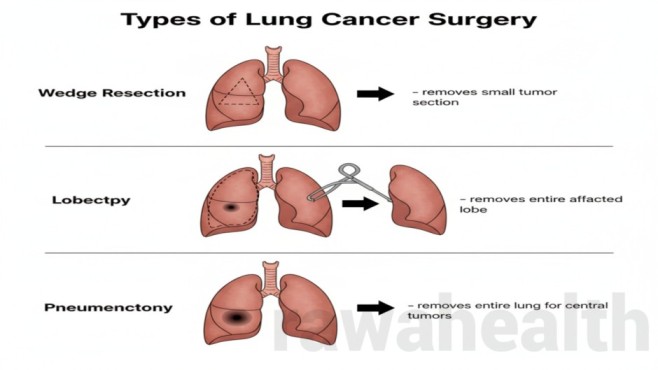
Types of Lung Cancer Surgery
Surgeons select the type of surgery based on the cancer’s stage, location, and lung function. Main types include:
Wedge Resection
Surgeons remove a small, wedge-shaped portion of lung tissue. This procedure suits patients with small, localized tumors. Wedge resection preserves most of the healthy lung.
Segmentectomy
Surgeons remove one to four segments of a lung lobe. This procedure balances tumor removal with maximum lung preservation.
Lobectomy
Surgeons remove an entire lobe. In some cases, a sleeve resection removes part of the lobe along with the main bronchus, which is then reattached to maintain airflow.
Bilobectomy
Surgeons remove two lobes of the right lung. This procedure is less common but may be necessary for extensive tumors.
Pneumonectomy
Surgeons remove an entire lung. This major procedure treats extensive lung cancer or damage.
Lung Volume Reduction Surgery
Surgeons remove damaged or trapped air pockets in the lungs, often for patients with emphysema or severe tissue damage.
Who is a Candidate for Lung Cancer Surgery?
Doctors recommend lung cancer surgery for patients who:
- Have early-stage localized tumors
- Can tolerate anesthesia and surgery based on overall health
- Do not have widespread cancer in other organs
- Require tissue sampling to confirm diagnosis
- Show progressive symptoms like breathing difficulty or persistent infections
Your surgeon evaluates your lung function and overall health to determine eligibility.
Preparing for Lung Cancer Surgery
- Preparation ensures safety and optimal results. Steps include:
- Medical Assessment
- Blood tests, ECG, chest imaging (X-ray, CT scan), pulmonary function tests.
- Medication Review
- Inform your doctor about blood thinners, supplements, or implanted medical devices.
- Lifestyle Preparation
- Stop smoking, maintain a nutritious diet, and arrange home care support.
- Pre-Surgery Fasting
- Avoid eating or drinking for the recommended hours before surgery.
- Hospital Planning
- Arrange transportation, hospital stay, and post-surgery care.
How is Lung Cancer Surgery Performed?
Surgeons perform lung cancer surgery using either minimally invasive techniques or open surgery, depending on the case.
Minimally Invasive Surgery (VATS / RVATS)
- Surgeons make small incisions and use a thoracoscope (lighted tube with a camera) or robotic instruments.
- They carefully remove diseased tissue while preserving healthy lung.
- This method reduces pain, scarring, and recovery time.
Open Surgery (Thoracotomy)
- Surgeons make a larger incision and spread the ribs to access the lung.
- They remove affected lung tissue or lobes and place a chest tube to drain fluids.
- Open surgery suits large or complex tumors.
Recovery After Lung Cancer Surgery
Recovery depends on surgery type and patient health:
- Hospital Stay: 2–5 days for minimally invasive surgery; longer for open surgery.
- Chest Tubes: Usually stay 24–48 hours to remove excess fluid.
- Breathing Exercises: Doctors teach deep breathing and coughing exercises to prevent lung infections.
- Activity: Gradually resume walking and daily activities. Avoid heavy lifting initially.
- Follow-Up: Regular imaging and check-ups monitor healing and detect recurrence early.
Most patients regain normal activities within two weeks after minimally invasive surgery, while open surgery may require a month or more.
Benefits of Lung Cancer Surgery
- Removes cancerous tissue and prevents spread
- Provides tissue for accurate diagnosis
- Improves breathing and lung function
- Offers faster recovery with minimally invasive techniques
- Enhances overall quality of life
Risks and Considerations
Lung cancer surgery carries potential risks:
- Air leaks or pneumothorax
- Irregular heartbeat or arrhythmia
- Bleeding or hemothorax
- Infection at incision sites
- Blood clots (pulmonary embolism)
- Reactions to anesthesia
Choosing an experienced thoracic surgeon and following post-op instructions reduce these risks.
Long-Term Outlook
Patients may need additional treatments such as chemotherapy or radiation depending on cancer stage. Following a lung-healthy lifestyle, maintaining proper nutrition, and attending all follow-up appointments increase long-term survival rates.
Cost of Lung Cancer Surgery in India
India provides high-quality lung cancer treatment at a fraction of the cost in Western countries. Surgery cost varies based on procedure type, hospital, surgeon, and duration of stay.
| Type of Lung Surgery | Average Cost (USD) |
|---|---|
| Lobectomy | $4,000 – $7,000 |
| Pneumonectomy | $5,000 – $9,000 |
| Segmentectomy/Wedge Resection | $3,500 – $6,500 |
| Sleeve Resection | $5,000 – $8,000 |
| Minimally Invasive Surgery (VATS/Robotic) | $6,000 – $10,000 |
Conclusion
Lung cancer surgery remains a cornerstone treatment for early-stage and localized lung cancers. With multiple surgical options—from lobectomy to minimally invasive VATS—patients can expect effective tumor removal, symptom relief, and improved survival.
India offers highly skilled thoracic surgeons, advanced medical facilities, and affordable treatment options, making it a preferred destination for both domestic and international patients. Consulting an experienced oncologist and thoracic surgeon ensures personalized care and optimal outcomes.
Early detection, proper surgical planning, and dedicated post-operative care remain key factors in maximizing the benefits of lung cancer surgery.
Our Step-by-Step Process – How We Work
- Initial Consultation: Understand medical history, concerns, and goals for personalized guidance.
- Personalized Treatment Plan: Customized plan with recommended treatment, costs, and timeline.
- Travel & Preparation: Visa, airport transfers, accommodation, and language support.
- Scheduling & Procedure: Treatment at top hospitals with experienced doctors using advanced technology.
- Aftercare & Follow-Up: Nursing care, follow-ups, and continuous support for smooth recovery.
Why Patients Choose India for Medical Treatment
- Expert Doctors & Specialists: Highly skilled, internationally trained doctors handle advanced procedures and complex surgeries.
- State-of-the-Art Hospitals: Modern hospitals with latest technology and international accreditations ensure world-class treatment.
- Affordable Costs: Medical care in India is 30%–70% cheaper than in Western countries without compromising quality.
- Quick Access: Minimal waiting times allow patients to get treated promptly.
- End-to-End Support: Visa, airport transfers, accommodation, language translation, and post-treatment follow-up provided.
- High Success Rates: Proven track record in surgeries, transplants, and advanced treatments.
- Personalized Care: Individual attention ensures a smooth, safe, and comfortable medical journey.