Advanced Laser Eye Surgery in India – Safe & Effective Vision Correction
Laser Eye Surgery: A Complete Guide
Laser eye surgery, often referred to as LASIK (Laser-Assisted In Situ Keratomileusis), is a revolutionary medical procedure that corrects vision problems by reshaping the cornea. With millions of people worldwide relying on corrective eyewear, laser eye surgery offers an opportunity to reduce or eliminate dependence on glasses or contact lenses. This guide will provide a detailed look at the procedure, its types, benefits, risks, costs, and why India is becoming a preferred destination for this surgery.
Understanding Laser Eye Surgery
The human eye is designed to bend light properly so that it focuses on the retina, producing a clear image. However, vision problems occur when the cornea or lens doesn’t bend light correctly. Common refractive errors include:
- Nearsightedness (Myopia) – Difficulty seeing distant objects clearly.
- Farsightedness (Hyperopia) – Difficulty seeing objects up close.
- Astigmatism – An irregular corneal shape causing blurred vision.
Laser eye surgery reshapes the cornea, allowing light to focus correctly on the retina. The procedure is usually outpatient, quick, and painless, with patients awake but numbed with drops.
Types of Laser Eye Surgeries
Several types of laser eye surgery are available today:
1. LASIK
LASIK is the most common procedure. It involves creating a thin flap in the cornea and reshaping the underlying tissue with a laser. Advantages include quick recovery and minimal discomfort.
2. PRK (Photorefractive Keratectomy)
PRK is suitable for people with thin corneas. Instead of creating a flap, the outer corneal layer is removed and the laser reshapes the cornea directly. Recovery is slightly longer than LASIK, but results are excellent.
3. SMILE (Small Incision Lenticule Extraction)
SMILE is a newer, minimally invasive procedure where a small lens-shaped tissue is removed from within the cornea through a tiny incision. It offers reduced risk of dry eyes and faster healing.
4. ICL (Implantable Collamer Lens)
For patients with severe myopia or unsuitable corneas for LASIK, ICL involves implanting a special lens inside the eye to correct vision. This is reversible and provides excellent results.
Who Can Benefit
Laser eye surgery can benefit those who:
- Are over 18 years old with fully developed eyes.
- Have a stable vision prescription for at least 12 months.
- Want to reduce or eliminate dependence on glasses or contact lenses.
- Are willing to follow post-operative care instructions.
It is ideal for people with myopia, hyperopia, or astigmatism, and those who find glasses inconvenient for sports, work, or daily life.
Who Should Avoid Laser Eye Surgery
Certain conditions make laser eye surgery unsuitable:
- Rapidly changing prescriptions or unstable vision.
- Thin or irregular corneas.
- Severe dry eyes.
- Cataracts, glaucoma, or keratoconus.
- Pregnant or nursing women.
- Autoimmune disorders that may affect healing.
A thorough eye examination is essential to determine candidacy.
Benefits of Laser Eye Surgery
The advantages of laser eye surgery are significant:
- Reduced reliance on corrective eyewear – Most patients achieve 20/20 vision.
- Quick procedure and recovery – Many return to work within a few days.
- Minimal discomfort – Numbing drops reduce pain during surgery.
- Convenience for active lifestyles – Ideal for athletes or those in outdoor professions.
- Long-lasting results – While aging may affect vision later, benefits usually last for years.
Risks and Complications
Like any surgery, laser eye surgery carries some risks:
- Dry eyes – Temporary decreased tear production, manageable with drops.
- Glare, halos, or light sensitivity – Often resolves within months.
- Blurred or double vision – Usually temporary; may require enhancement.
- Flap complications or infection – Rare with modern techniques.
It is essential to follow all pre- and post-operative instructions to minimize risks.
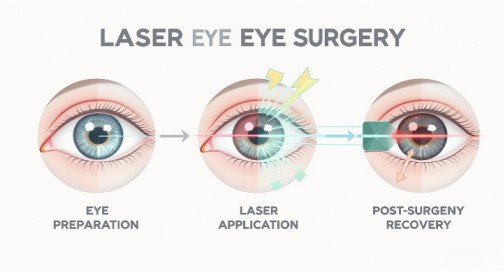
Step-by-Step Procedure
- Pre-surgery preparation – Stop wearing contact lenses for several weeks; avoid makeup or lotions.
- Numbing the eyes – Eye drops ensure a painless procedure.
- Eye stabilization – A speculum holds the eyelids open.
- Laser reshaping – For LASIK, a corneal flap is created and lifted; a laser reshapes the cornea. For PRK or SMILE, laser removes or reshapes tissue differently.
- Flap repositioning – The corneal flap is replaced and starts healing immediately.
- Protection – A shield is applied to prevent accidental rubbing.
The entire procedure usually takes less than 30 minutes, with the laser active for only a few seconds per eye.
Recovery and Aftercare
- Mild discomfort, burning, or itchiness is normal.
- Use prescribed eye drops for lubrication, infection prevention, and inflammation control.
- Avoid touching or rubbing the eyes.
- Limit strenuous activity, swimming, and eye makeup for a few weeks.
- Follow-up appointments are essential for 6 months to monitor healing.
Most patients notice improved vision within a few days, but full stabilization may take 3–6 months.
Expected Results
- Majority achieve 20/20 vision or better.
- Some patients may require enhancement surgery for perfect correction.
- Aging can cause changes in vision; presbyopia may require reading glasses later.
Types of Laser Eye Surgery and Cost
| Procedure | Cost (USD) |
|---|---|
| Conventional LASIK | $240 – $360 |
| Sub-Bowman’s LASIK (SBK) | $360 – $480 |
| Femtosecond Bladeless LASIK | $960 – $1,200 |
| SMILE Laser Surgery | $960 – $1,200 |
| Epi Contoura LASIK | $1,140 – $1,260 |
| Contoura Vision LASIK | $1,140 – $1,260 |
| SILK Laser Surgery | $1,320 – $1,680 |
| Wavelight® Plus / InnovEyes | $1,440 – $1,800 |
| ICL Surgery | $1,980 – $2,280 |
| RLE Surgery | $1,560 – $2,400 |
| Customised LASIK | $800 – $850 |
| FEMTO LASIK (Bladeless) | $1,250 – $1,300 |
| Contoura Vision | $1,400 – $1,450 |
| SILK with Wavelight | $1,650 – $1,700 |
| ReLEx SMILE (Flapless, AI-assisted) | $2,250 – $2,300 |
Our Step-by-Step Process – How We Work
- Initial Consultation: Understand medical history, concerns, and goals for personalized guidance.
- Personalized Treatment Plan: Customized plan with recommended treatment, costs, and timeline.
- Travel & Preparation: Visa, airport transfers, accommodation, and language support.
- Scheduling & Procedure: Treatment at top hospitals with experienced doctors using advanced technology.
- Aftercare & Follow-Up: Nursing care, follow-ups, and continuous support for smooth recovery.
Why Patients Choose India for Medical Treatment
- Expert Doctors & Specialists: Highly skilled, internationally trained doctors handle advanced procedures and complex surgeries.
- State-of-the-Art Hospitals: Modern hospitals with latest technology and international accreditations ensure world-class treatment.
- Affordable Costs: Medical care in India is 30%–70% cheaper than in Western countries without compromising quality.
- Quick Access: Minimal waiting times allow patients to get treated promptly.
- End-to-End Support: Visa, airport transfers, accommodation, language translation, and post-treatment follow-up provided.
- High Success Rates: Proven track record in surgeries, transplants, and advanced treatments.
- Personalized Care: Individual attention ensures a smooth, safe, and comfortable medical journey.
Get Started with Rawa Health Services
- If you’re considering treatment in India, Rawa Health Services will guide you every step of the way:
- ✅ Free Pre-Surgery Consultation
✅ Doctor & Hospital Appointment
✅ Visa & Travel Assistance
✅ Airport Pickup & Accommodation
✅ Post-Treatment Support
✅ Multilingual Translators for Your Native Language - 📞 Call/WhatsApp: +91-9990978550
📧 Email: rawahealthservices@gmail.com